Schema Templates Designer

Turning schema into reusable data contracts (shape + validations + meaning)

Nexla • UX Case Study

Executive Summary

From Ambiguous Templates to Shippable Contracts

Problem (why this mattered)

Schema templates were not functioning as reusable contracts:

  • Field lists only
  • Meaning and validations stayed in docs
  • Apply flow semantics were ambiguous
  • Mapping sessions created avoidable rework

Solution (what changed)

I reframed templates as a contract workflow and simplified apply:

  • Defined Shape + Validations + Annotations model
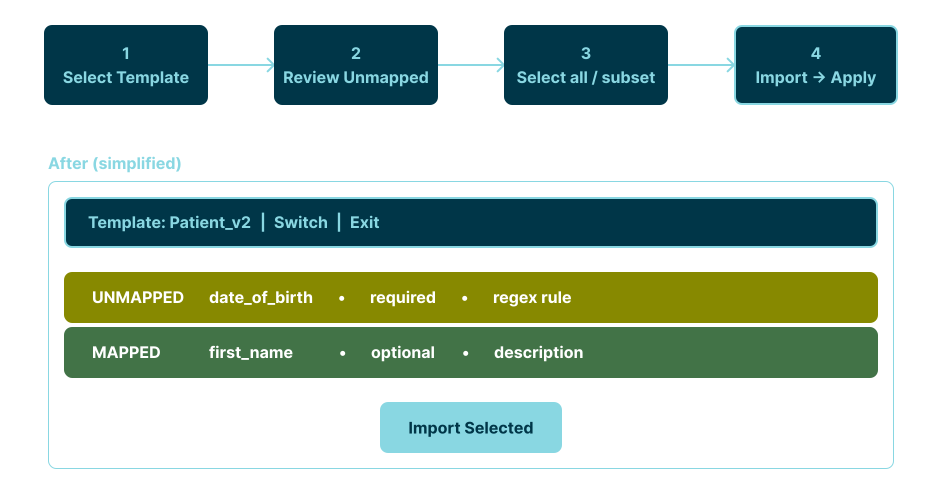
  • Defaulted apply to unmapped-first review
  • Made selection and import states explicit
  • Preserved control while reducing detours

Outcome

Goal: ship it, then scale

  • Teams moved through create -> preview -> apply with fewer ambiguous handoffs
  • Engineering received a clearer interaction model to implement quickly

Context & Users

Where this lives in the product

  • NextSet Designer: map + transform
  • Templates: reusable contracts
  • Goal: fast compliance + control

Two primary users

  • Template consumer (operator): close gaps; import fast
  • Template author (contract owner): define rules at scale (JSON + UI)
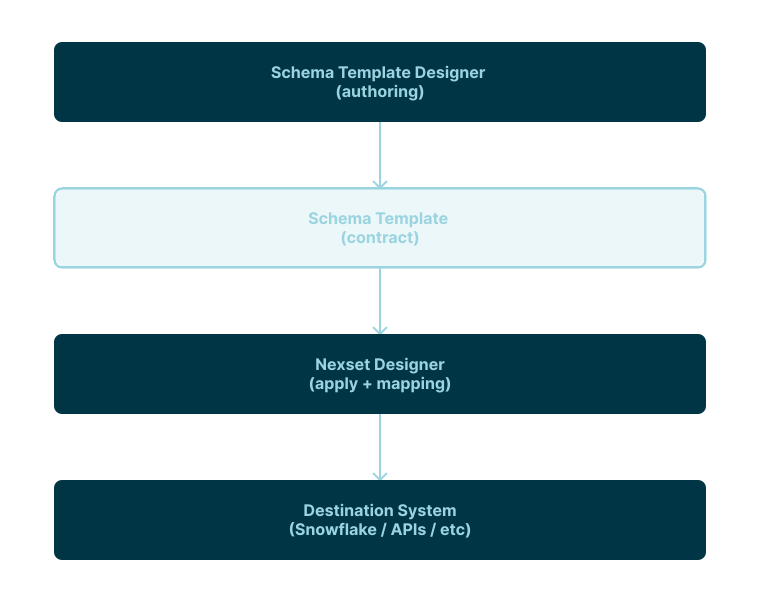
System flow from template authoring to template apply and destination

The UX debt

Breakdowns in the existing experience

  • Mapped + unmapped mixed
  • CTAs mismatched context
  • Authoring was samples-only

There's three separate JSON blobs I'm saving.

Eng/PM (technical constraint)
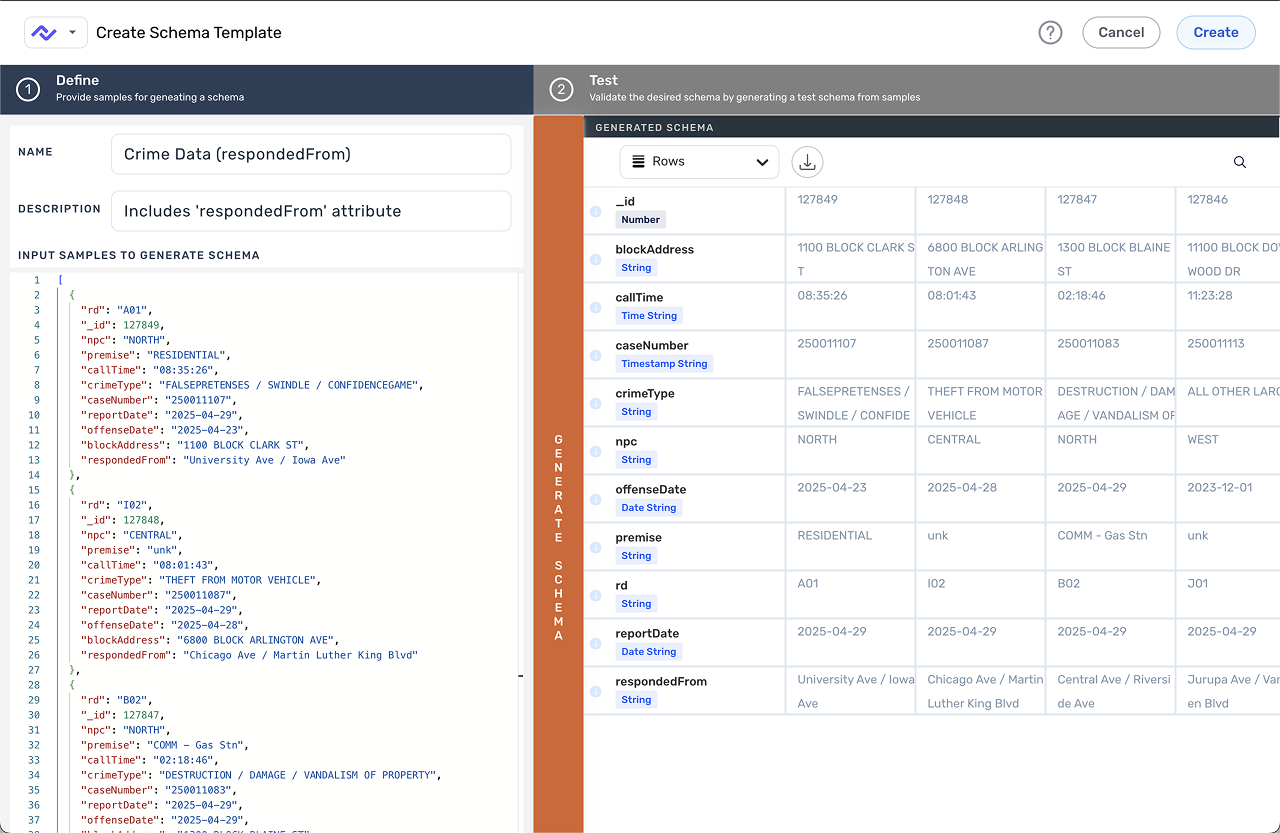
Before-state screenshot of schema template workflow issues

Principles & mental model

Design principles

  • Contract = shape + rules + meaning
  • Default to unmapped gaps
  • JSON + guided modes
  • Preview = apply

We were trying to add garnish... when we were missing a whole side.

Product lead (scope discipline)
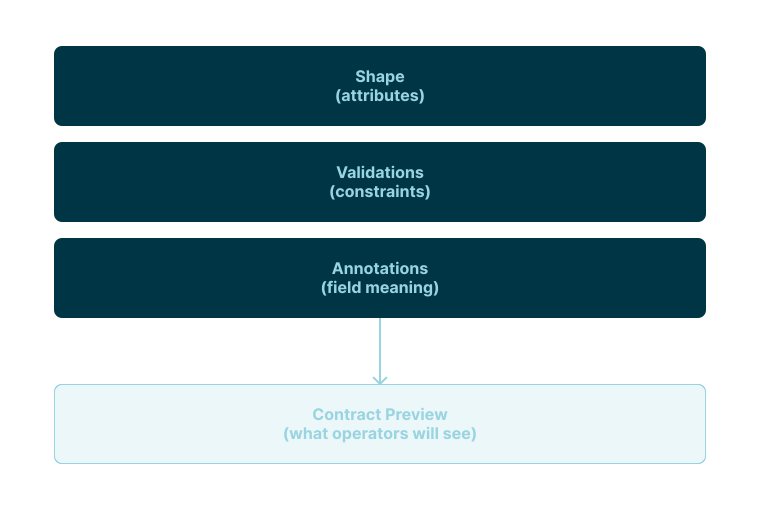
Contract mental model diagram showing shape, validations, annotations, and contract preview

Solution 1: apply templates in NextSet

Key interaction decisions

  • Unmapped-first focus
  • Select-all fast path
  • Guardrailed import
  • Inline rules
Horizontal apply flow and simplified after wireframe using BYO diagram styling

Solution 2: validations at scale

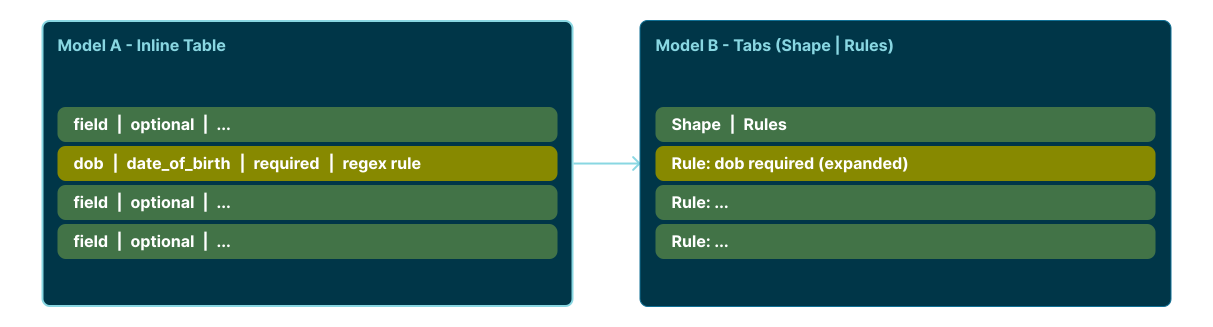
Model A — Pros

  • Scan fast
  • One-click import
  • Stay in flow

Model B — Pros

  • Lower noise
  • Scales with rules
  • Separate concerns
Model A inline table and Model B tabs wireframe comparison with decision strip

Solution 3: author templates | 3 inputs -> live preview

Samples / Shape

  • Samples / paste JSON

Validations

  • Guided + JSON rules

Annotations

  • Field meaning

That is your output side. You want to modify, then modify an input side.

Design sync
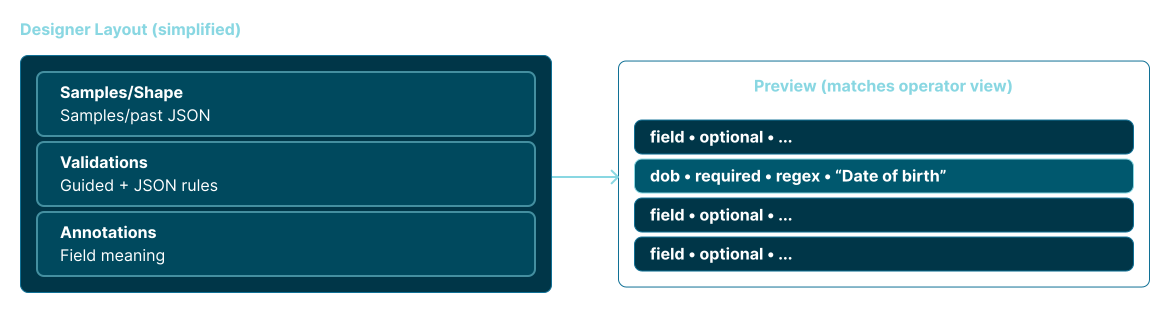
Designer layout simplified wireframe with three input lanes and operator-matching preview

Outcome + success metrics

Delivered workflow + KPI plan.

What I delivered (implementation-ready)

  • Unmapped-first apply model
  • 3-input authoring + preview
  • Spec: defaults + edge cases

Success metrics (post-launch)

  • Time to valid output
  • Select -> import conversion
  • Edits after import
  • Adoption + support signals
Why: contracts reduce mapping incidents.

Learnings & next steps

What I learned

  • Contracts need meaning + constraints
  • Defaults build trust
  • Vertical hierarchy beats reveals

Next iterations I’d drive

  • Operator usability test (5–7)
  • Scale via tabs fallback
  • Add governance signals

Shipped the “side dish” first; polished later.

— Reflection
Closing: create → preview → apply.